





What Is a Marimo? The Moss Ball, Explained
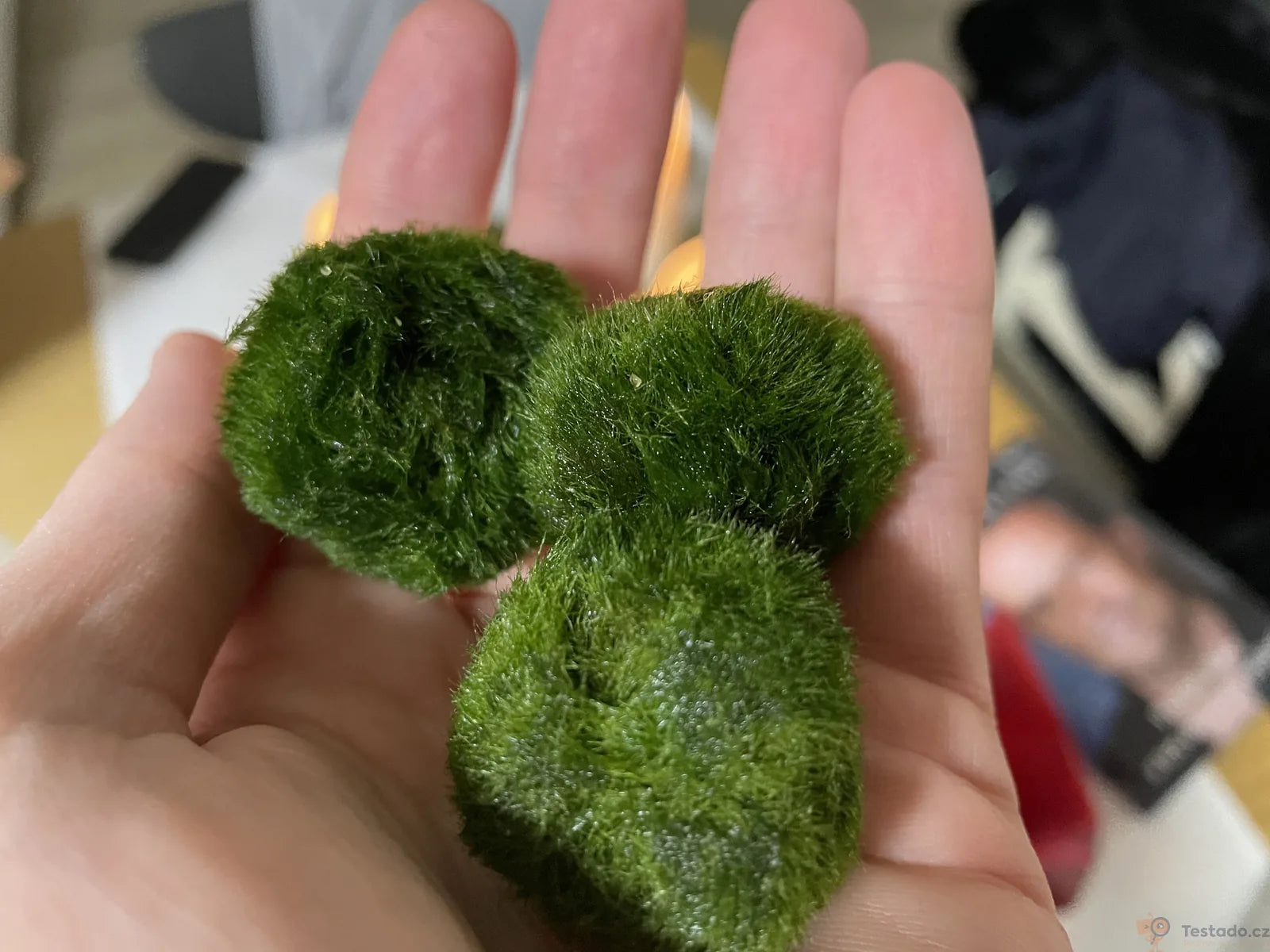

A marimo, often called a moss ball, is a ball of green algae, not moss. Each one is made of many fine threads of the alga Aegagropila linnaei growing together. In a few lakes, gentle waves roll those threads into round balls. Marimo are alive and make their own food from light, so they need no feeding.
Marimo in one sentence
A marimo is a ball made of many fine threads of a green alga. It is not a moss, and it is not one single plant.12
Quick facts
- What it is a green alga, not a moss.1
- How it's built many tiny threads growing together, not one plant.2
- Shapes it grows in three forms, and balls are the rarest.5
- Why it's round gentle waves roll it.8
- Where it grows wild across the Northern Hemisphere, mostly in northern Europe, plus Japan and a few places in North America.12
- Scientific name Aegagropila linnaei (also listed as A. brownii).15
- Food none needed. It lives on light.3
An alga, not a moss
"Moss ball" is a friendly nickname, not a biology label. Marimo is a green alga. DNA studies place it in its own genus, Aegagropila, separate from the look-alike alga Cladophora.1
So is a marimo a plant? The simplest honest answer: it's an alga that makes its own food from light, the same way plants do.3
One ball, many threads
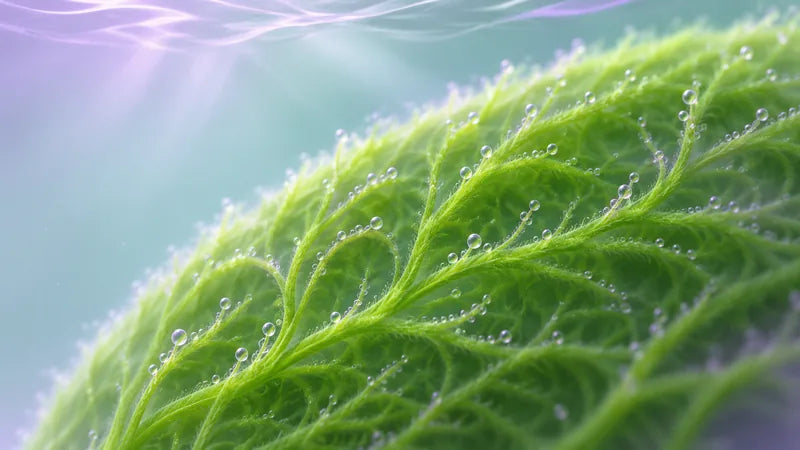
Look closely at a marimo and you won't find one stem or one root. A marimo ball is a mass of many branching, thread-like filaments all growing together.2 The big wild balls in Lake Akan, Japan, are even home to a community of bacteria, with inner layers of sediment and bacteria inside the largest ones.4
The three forms of marimo
The same alga grows in three different forms:5
- Attached: threads or tufts growing on rocks or shells.
- Loose: free-floating tufts, which form when attached marimo come loose or when balls break apart.
- Balls: the round form most people picture. It is also the rarest.
Colonies of large balls, about 12 cm (about 5 inches) or more across, are known with confidence today only from Lake Akan in Japan.6 Around the world, the ball form is disappearing faster than the attached form. The species hasn't been seen in the last 30 years at more than half of its known sites, mainly because of nutrient pollution.7 Read more in Why wild marimo are declining.
How a tangle of threads becomes a ball
In the wild, balls form where gentle wind waves roll the alga across a shallow, firm lake bottom. Rolling keeps every side in the light and shakes off debris.8 Balls larger than about 10 cm become hollow inside, because light can't reach the center.9 Marimo can also float for a while when oxygen bubbles from photosynthesis get caught in their threads.10
Without rolling, a ball's threads grow long and it turns loose and shaggy.11 That's why rolling is part of home care: see Cleaning and rolling your marimo. For the full story, read How marimo become balls.
Where marimo grow
Marimo grow wild in many countries, not only Japan. Scientists have recorded the species at 283 locations, mostly in central and northern Europe, with Sweden having the most. One 2010 study also counted more than 20 sites in Japan, plus a few in eastern North America, and later surveys added Kazakhstan, Mongolia and the Russian Far East.12 In fact, the species was first described from a lake in Sweden, by Linnaeus in the 1700s.13
See Where marimo grow in the wild for the full map.
Marimo in the family tree
For a long time marimo was named Cladophora aegagropila, because it looks like Cladophora. That's where the old trade name "Cladophora ball" comes from. DNA studies later showed marimo isn't Cladophora at all and gave it its own genus, Aegagropila.14
Today most research calls it Aegagropila linnaei. Since 2023, the two main naming databases list Aegagropila brownii as the correct name, and both names mean the same species.15 (The stringy Cladophora that washes up on Great Lakes beaches is a different alga entirely.16) The naming story is on Aegagropila linnaei: marimo's scientific name.
How marimo live and grow
Marimo are alive. They're living green algae cells that make their own food from light, water and carbon dioxide, and they grow and reproduce. They have no mouth and need no feeding.3 Marimo mostly spread by breaking into pieces that keep growing. Spores do form in the wild, but rarely.17
Marimo grow very slowly, roughly a centimeter a year or less in the wild.18 With simple care, marimo can live for decades. More on that in How long do marimo live? and Are marimo alive?
Where the name "marimo" comes from
The name marimo (毬藻) means "algae like a mari," a traditional Japanese ball. Botanist Takiya Kawakami gave it that name in 1898, after finding it at Lake Akan in 1897.19 The name is Japanese, but marimo grow wild in lakes across the Northern Hemisphere. See How marimo got its name.
FAQ
Is a marimo a moss?
No. Marimo is a green alga, not a moss. "Moss ball" is just a nickname.1
Is a marimo a plant?
It's an alga that makes its own food from light, the way plants do.3
Is a marimo one living thing?
Not quite. One marimo ball is many tiny threads of alga growing together.2
Do marimo only grow in Japan?
No. Wild marimo have been found in hundreds of places, mostly in northern Europe, plus Japan and a few sites in North America.12
Do marimo need food?
No. Marimo make their own food from light, so they never need feeding.3
Discover the Magic of Marimo
Design your own terrarium, or start with a ready-made kit.
Footnotes
- Hanyuda et al. 2002; Boedeker, O'Kelly, Star and Leliaert 2012.
- Nakayama et al. 2021; Kushiro City Board of Education, Marimo of Lake Akan.
- Cano-Ramirez et al. 2018; MARIMO Web, How to raise marimo (2).
- Nakai, Wakana and Niki 2021.
- Boedeker, Eggert, Immers and Wakana 2010; Marimo Lab, Life Form of Marimo panel (citing the 2012 Marimo Protection and Management Plan).
- Nakayama et al. 2021.
- Boedeker, Eggert, Immers and Smets 2010.
- Nakayama et al. 2021.
- Nakayama et al. 2021.
- Cano-Ramirez et al. 2018.
- Wakana 2019.
- Boedeker, Eggert, Immers and Wakana 2010.
- Guiry and Frödén 2023.
- Hanyuda et al. 2002.
- Guiry and Frödén 2023; AlgaeBase; World Register of Marine Species.
- Wisconsin Department of Natural Resources, Nuisance Algae (Cladophora) in Lake Michigan.
- Umekawa, Wakana and Ohara 2021.
- Nakayama et al. 2021.
- Kawakami 1898.
Sources
- Takeaki Hanyuda, Isamu Wakana, Shogo Arai, Kazuyuki Miyaji, Yasuyuki Watano, Kunihiko Ueda (2002). Phylogenetic relationships within Cladophorales (Ulvophyceae, Chlorophyta) inferred from 18S rRNA gene sequences, with special reference to Aegagropila linnaei. Journal of Phycology 38(3): 564-571. https://doi.org/10.1046/j.1529-8817.2002.01151.x. Checked 2026-11-04.
- Christian Boedeker, Charles J. O'Kelly, Wim Star, Frederik Leliaert (2012). Molecular phylogeny and taxonomy of the Aegagropila clade (Cladophorales, Ulvophyceae), including the description of Aegagropilopsis gen. nov. and Pseudocladophora gen. nov. Journal of Phycology 48(3): 808-825. https://biblio.ugent.be/publication?q=keyword+exact+%22LINNAEI%22. Checked 2026-11-04.
- Keisuke Nakayama, Katsuaki Komai, Keisuke Ogata, Toshiro Yamada, Yukinobu Sato, Fumiya Sano, Shintarou Horii, Yuichiro Somiya, Etsuko Kumamoto, Yoichi Oyama (2021). The structure and formation of giant Marimo (Aegagropila linnaei) in Lake Akan, Japan. Scientific Reports 11: 22017. https://doi.org/10.1038/s41598-021-01028-5. Checked 2026-11-10.
- Kushiro City (釧路市教育委員会 マリモ研究室). 阿寒湖のマリモ|釧路市ホームページ [Marimo of Lake Akan (Kushiro City website, Board of Education marimo page)]. https://www.city.kushiro.lg.jp/museum/bunkazai/1005708/kinenbutsu/1005712.html. Checked 2026-11-04.
- Dora L. Cano-Ramirez, Tara Saskia de Fraine, Olivia G. Griffiths, Antony N. Dodd (2018). Photosynthesis and circadian rhythms regulate the buoyancy of marimo lake balls. Current Biology 28(16): R869-R870. https://doi.org/10.1016/j.cub.2018.07.027. Checked 2026-11-10.
- MARIMO Web, official site of the Special Natural Monument "Marimo of Lake Akan" (run by Akan tourism groups, Kushiro City Board of Education and the marimo protection society). マリモの育て方(2) [How to raise marimo (2)]. http://www.marimo-web.org/faq/qa_grow2.html. Checked 2026-11-04.
- Ryosuke Nakai, Isamu Wakana, Hironori Niki (2021). Internal microbial zonation during the massive growth of marimo, a lake ball of Aegagropila linnaei in Lake Akan. iScience. https://doi.org/10.1016/j.isci.2021.102720. Checked 2026-11-10.
- Christian Boedeker, Anja Eggert, Anne Immers, Isamu Wakana (2010). Biogeography of Aegagropila linnaei (Cladophorophyceae, Chlorophyta): a widespread freshwater alga with low effective dispersal potential shows a glacial imprint in its distribution. Journal of Biogeography 37: 1491-1503. https://doi.org/10.1111/j.1365-2699.2010.02309.x. Checked 2026-11-09.
- Marimo Lab, Kushiro Board of Education. Source line on panel: マリモ保護管理計画, 阿寒湖のマリモ保全対策協議会, 2012 (Marimo Protection and Management Plan, Lake Akan Marimo Conservation Council, 2012). マリモの生活形 [Life Form of Marimo (with tank labels 集合型マリモ Aggregation Type of Marimo and 着生型マリモ Attached Type of Marimo)]. Checked 2026-11-04.
- Christian Boedeker, Anja Eggert, Anne Immers, Erik Smets (2010). Global Decline of and Threats to Aegagropila linnaei, with Special Reference to the Lake Ball Habit. BioScience 60(3): 187-198. https://doi.org/10.1525/bio.2010.60.3.5. Checked 2026-11-09.
- Isamu Wakana (2019). ④ 球状マリモ栽培の基本的な考え方 [(4) Basic approach to growing ball marimo]. https://ameblo.jp/maromo-lab/entry-12465712763.html. Checked 2026-11-04.
- Michael D. Guiry, Patrik Frödén (2023). Aegagropila brownii (Dillwyn) Kützing is the correct name for Aegagropila linnaei Kützing, the type of Aegagropila Kützing (Pithophoraceae, Chlorophyta), widely known as "Marimo" or "Cladophora Balls". Notulae Algarum 293: 1-7. https://notulaealgarum.org/2023/documents/Notulae%20Algarum%20No.%20293.pdf. Checked 2026-11-10.
- AlgaeBase (Guiry and Guiry, University of Galway). Aegagropila linnaei Kützing 1843 (species record). https://www.algaebase.org/search/species/detail/?species_id=59094. Checked 2026-11-10.
- World Register of Marine Species. Aegagropila linnaei Kützing, 1843 (WoRMS name details). https://www.marinespecies.org/aphia.php?id=381150&p=taxdetails. Checked 2026-11-10.
- Wisconsin Department of Natural Resources. Nuisance Algae (Cladophora) in Lake Michigan. https://dnr.wisconsin.gov/topic/GreatLakes/Cladophora.html. Checked 2026-11-04.
- Taketo Umekawa, Isamu Wakana, Masashi Ohara (2021). Reproductive behavior and role in maintaining an aggregative form of the freshwater green alga Marimo, Aegagropila linnaei, in Lake Akan, Hokkaido, Japan. Aquatic Botany 168: 103309. https://doi.org/10.1016/j.aquabot.2020.103309. Checked 2026-11-10.
- Takiya Kawakami (川上瀧彌) (1898). 釧路國阿寒地方採集記 (承前) [Collecting notes from the Akan district, Kushiro Province (continued)]. 植物学雑誌 (Botanical Magazine, Tokyo) 12 (137): 220-225. https://doi.org/10.15281/jplantres1887.12.137_220. Checked 2026-11-10.
Related guides
Are Marimo Moss Balls Alive? Yes, and Here's How You Can Tell
Yes, marimo moss balls are alive. Each one is a ball of living green algae that makes its own food from light, so it never needs feeding.
Read the guide →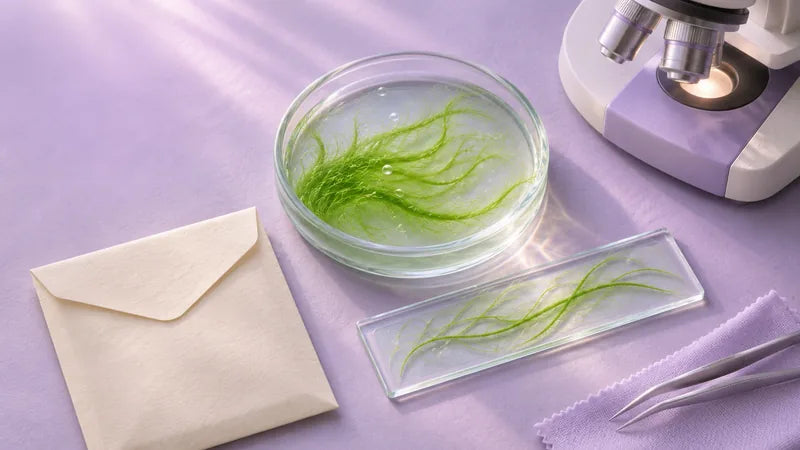
Aegagropila linnaei: The Marimo's Scientific Name, Explained
Marimo's scientific name is Aegagropila linnaei (also listed as A. brownii). It's a green alga in its own genus, Aegagropila, not a moss and not Cladophora.
Read the guide →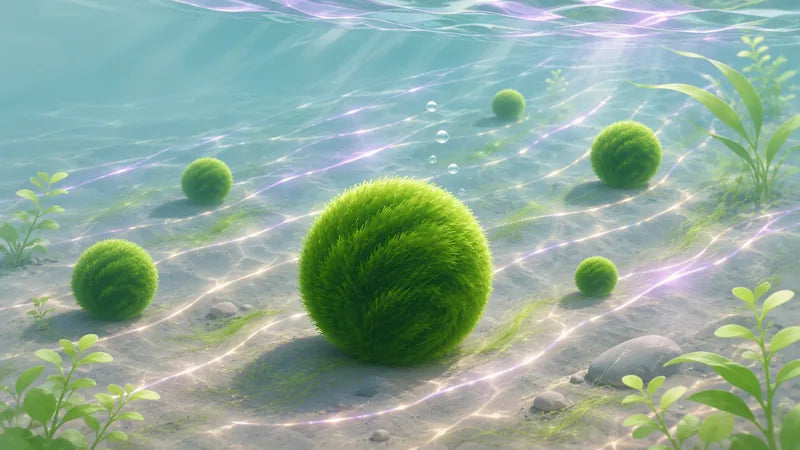
How Marimo Become Balls, and Whether You Can Make One
Gentle waves roll marimo along a shallow lake bottom, and that rolling makes them round. No published study has shown a way to make a true marimo ball at home.
Read the guide →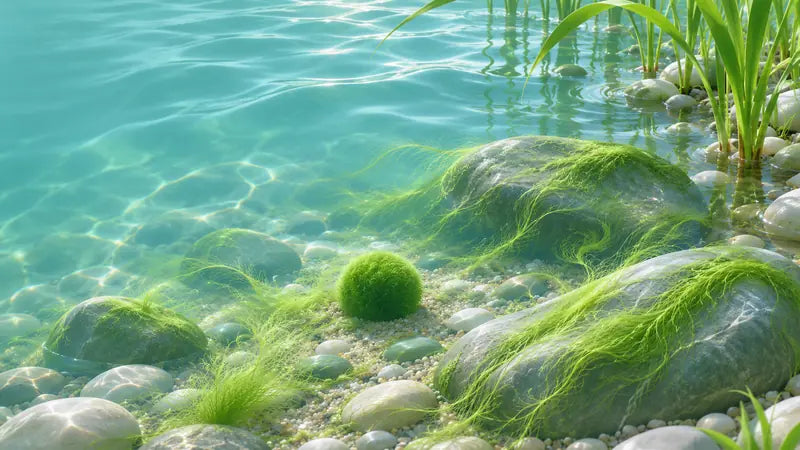
Where Marimo Grow in the Wild
Marimo grow wild in many lakes across the Northern Hemisphere, mostly in northern and central Europe, plus Japan and a few other places. They do not grow only in Japan.
Read the guide →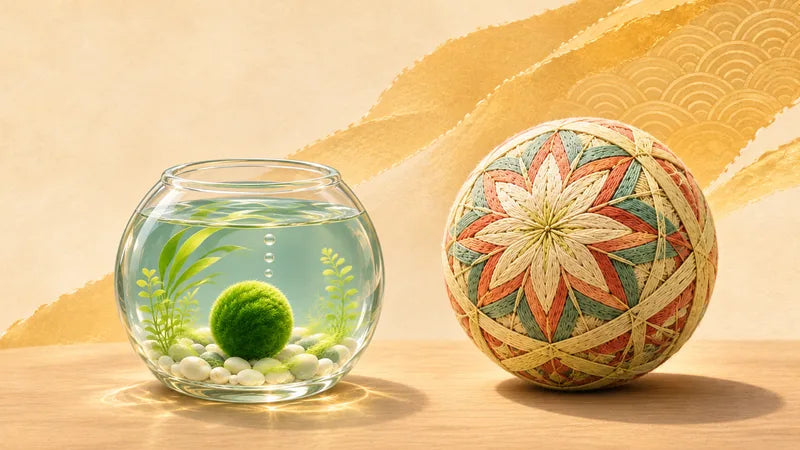
How Marimo Got Its Name
"Marimo" is a Japanese word, written 毬藻. 毬 means a ball and 藻 means algae or water plants, so it means "ball alga".
Read the guide →
Marimo Myths, Checked
Marimo are living green algae, not moss and not animals. They do not need distilled water, salt, or fertilizer, and can live for decades. They grow wild in many countries, not only in Japan.
Read the guide →