






Lake Mývatn Marimo


Lake Mývatn, a shallow lake in north Iceland, once held dense beds of lake balls, mostly about 10 to 15 cm across. Those beds collapsed between the 1990s and about 2013. Small balls have turned up since 2016, but published surveys have not documented a returned large colony. This page is about the wild lake, not about the marimo we sell.
Quick facts
- Where it is a shallow, spring-fed lake of about 37 km² (3,700 ha) in the Suður-Þingeyjarsýsla region of north Iceland. It is about 2,300 years old and has two basins, Ytriflói in the north and Syðriflói in the south. Official sources vary a little on area and depth, so we don't print one depth as settled.1
- Icelandic names kúluskítur for the ball form, vatnaskúfur for the alga, and vatnadúnn for the free-floating tuft form.4
- Found by scientists in 1978, after one ball was caught in a 1977 survey.5
- Beds in 1979 about 23.5 ha in the east and about 3.5 ha in the south-west. Balls were about 10 to 15 cm across. In 1999 the south-west patch held about 150 balls per square metre.6
- The collapse under 2% of the 1979 area was left by about 2007 to 2008. The south-west patch was gone by 2012, and the last small eastern patch was gone by 2013.2
- Why it happened researchers link the loss to cyanobacteria blooms that shaded the bottom and to mud burying the balls. How much came from human nutrients, from mining (1967 to 2004), or from natural swings is still debated.7
- Species protection Iceland has protected lake balls as a species, wherever they grow wild, by notice no. 523, dated 13 June 2006.8
- The lake and river Mývatn and the Laxá river have been protected since 1974. The protection area was reduced in 2004 to 15,323 ha. The region has been Ramsar site 167 since 2 December 1977.9
- A shared research story Isamu Wakana, who studies Lake Akan, and Árni Einarsson, who studies Mývatn, have worked together. Wakana scuba-dived the lake in 2012 and helped search it again in 2014.10
- Later sightings small balls were reported in 2016. A 2019 camera survey found a sign that lake ball still grows on rocks, and small balls were seen again from 2020 to 2022, mostly in the north basin. No returned large colony has been documented.3
Where is Lake Mývatn?
Lake Mývatn is in the Suður-Þingeyjarsýsla region of north Iceland. It is a shallow, spring-fed lake formed about 2,300 years ago in a volcanic eruption. Official sources agree on that setting, but they disagree a little on size and depth, so here are the figures, with no winner picked:1 - About 37 km², or 3,700 ha: Ramsar's 2013 mission report uses about 3,700 ha. The official Lake Akan site gives 37 km², about 2.8 times Lake Akan, and an average depth of about 2 m. - About 4,000 ha: the 1992 Ramsar information sheet uses that area, a north basin under 1.5 m mean depth, and a south basin up to 4 m, with a mean of 2.2 m.
We use about 37 km², and we don't print one depth as settled.
The lake has two main basins: Ytriflói in the north, fed mainly by thermal groundwater springs, and Syðriflói in the south, fed by cold springs. The water is rich in minerals, which one official report calls "the main reason for the fertility of the lake."1
Mud cores show the alga lived in Mývatn through most of the lake's 2,300 years, and that, in the upper part of the core, it did worse in periods of more cyanobacteria. Those papers were read as abstracts only, so this stays as one short note.11
The wider map of where marimo grow is on Where marimo grow in the wild.
What were Mývatn's lake balls like?
Icelandic uses three words for what lived in the lake: kúluskítur for the lake-ball form, vatnaskúfur for the alga itself (Aegagropila linnaei), and vatnadúnn for the free-floating tufts. The lake also had algae attached to hard surfaces. We give those names as they stand and don't add English meanings for vatnaskúfur or vatnadúnn.4
The name kúluskítur can be glossed "ball muck." Icelandic sources say it comes from farmers and fishers at Mývatn calling anything caught in their nets "skítur."4
The colonies were soft, green, and mostly about 10 to 15 cm across, lying in dense beds in the south of the lake. Sources describe three main patches: two in the South Basin of 12 to 15 cm balls lying close together, in places in two to three layers, where currents meet during storms, and one in the North Basin of small balls. In 1999 the south-west patch held about 150 balls per square metre. Other sources give diameters from about 10 cm to 15 cm, so we use "about 10 to 15 cm across" and don't pick one size as settled.6
Mývatn balls grow outward from a centre. They are "neither a bundle of entangled filaments nor formed around a stone." The official Lake Akan site calls them radial like Akan's balls, but smaller and softer. The general formation story is on How marimo become balls.12
The North Basin balls were found around 1989. They grow only 3 to 4 cm, grow attached to pondweed-type plant roots, and have "neither a known nor a likely connection" with the South Basin balls.6
One official Japanese site estimated about 20 million balls. There is no published study or historical record for the original survey behind that figure, so we don't print it as fact. That gap is listed below.25
How the balls were found
A systematic survey of the lake bottom in 1977 ran while the lake was cloudy with an Anabaena bloom, and brought up only one lake ball. In 1978, a rare clear-water summer, Árni Einarsson saw "a huge field of dark green lake balls" from a boat in the eastern part of the South Basin. Another smaller patch was soon found in the south-west bay, Bekraflói. Scientists working on the lake had thought such balls were rare accidents of filaments rolled up by currents.5
The algal mat of the South Basin had already been noticed. Finnur Guðmundsson recorded it in 1939, in work that stayed unpublished, and it was identified as Cladophora aegagropila, now Aegagropila linnaei, during work led from the University of Copenhagen around 1970.5
Aerial photos from the clear-water year 1979 gave the patch areas: about 23.5 ha in the east and about 3.5 ha in the south-west.6
What happened to the colonies?
Mývatn's large lake-ball colonies collapsed between the 1990s and about 2013. Sources disagree on the exact end year, so we give the dates and don't pick one year as settled.2
The first signs came in the 1990s. In 1990 to 1991 the South Basin algal mat was much reduced, most likely after intense cyanobacteria blooms in 1988 to 1989. In 1999 a visit to the east area found only a few small patches where huge colonies had been seen in the 1980s.2
The south-west patch still held about 150 balls per square metre in 1999. By 2007 and 2008 it was down to about 0.5 ha, from about 3.5 ha in 1979. The report also gives about 1.6 ha for an earlier mapping, but its own text is not clear on the year, so we leave that figure out. In 2006 the large eastern patch had all but vanished, with six tiny patches in its place. Overall, in 28 years the lake ball areas had shrunk to less than 2% of their 1979 size.2
In 2010 and 2011, attempts to collect balls for a local museum failed. In 2012 the south-west patch "did not exist any more": balls were under mud, and the rest were half buried and not thriving. A small eastern patch looked healthy on 5 July 2012 and had vanished by 2013. Einarsson's 2014 report says, "By now (2013) it is clear that the communities of lake balls have vanished."2
The 2013 Ramsar mission quoted Iceland's Environment Agency Red List of protected areas at risk as saying that only about 2% of the original ball population remained. In 2014, the Mývatn Research Station (RAMÝ) wrote that lake ball "may now be counted as practically gone," and a search of Bekraflói with Isamu Wakana and Japanese television (NHK) found no sign of them. Iceland's Environment Agency (Umhverfisstofnun) said in 2017 that lake ball, "a protected species," was "nearly gone from Mývatn," but that this growth form "could possibly come back." A 2019 article by Wakana says the ball form had disappeared by 2014. The Icelandic Institute of Natural History's 2025 page says the South Basin algal carpet that once marked the lake was mostly gone by 2024.13
Why did they disappear?
Researchers link the loss to cyanobacteria blooms that shaded the bottom and to mud burying the balls. How much came from human nutrients, from mining, or from natural swings is still debated, so we show the views and don't pick a winner.7


For the south-west colony, Einarsson describes the process in detail. Balls were buried by mud creeping south along the bottom, pushed by storm currents once the algal mat that holds the mud down had thinned. In low light the ball "begins to rot from the inside," which weakens it, and then the waves that once rolled it gently tear it apart. The east patch seems to have "moved its width in six years" before it was lost. A 2012 joint abstract puts the same story in short: at Mývatn the aggregations were gradually covered by mud and a mat of free-floating filaments, and the population shrank quickly, perhaps linked to changed storminess and cyanobacteria blooms.14
Einarsson's report states the most likely single cause as "increased intensity or duration of cyanobacterial blooms."15
On what drove those blooms, sources do not agree: - Human nutrients: the same report's epilogue blames eutrophication from human activity. Umhverfisstofnun in 2017 says nutrient enrichment of human origin is thought to be one explanation. Wakana's 2019 article calls eutrophication the trigger. - Mining and natural swings: the body of Einarsson's report finds "no observed trend" in blooms since 1973, and none in water clarity from 1973 to 2011. It notes that blooms are not new to the lake, and says sediment-core work links cyanobacteria and the alga's decline in past centuries too. A 1993 sediment-core study found cyanobacteria-pigment peaks that coincided with volcanic ash falls, and suggested the ash may have fed the blooms. The report also says the 1967 to 2004 mining "amplified natural fluctuations." - A later view: the institute's 2025 page says blooms now seem thicker, more widespread and longer, and gives lack of light from cyanobacteria as the most likely reason the algal carpet is gone. That does not match the earlier "no trend" finding, and the two sources are about 11 years apart. We pick no winner.7
Industrial mining of the lake-bottom diatomite began in 1967 in Ytriflói by suction dredging, and a refinery at Bjarnarflag made about 22,000 tonnes of diatomite a year. Mining "was formally ended in 2004 and the refinery closed, because of economic reasons." The 1992 Ramsar mission noted lower Arctic char and duck numbers, and disturbed sediment and lost plants in the dredged area, and urged the "precautionary principle." Those dates are well established. How much the mining contributed to the collapse of the balls is part of the debate above, not a settled cause.16
Officials also disagree on what can be done in the lake. Umhverfisstofnun said in 2017 that restoration of lake ball must be attempted "if possible," and that sewage treatment needs improving. Einarsson's report says "no in-lake actions seem feasible," and that the realistic step is to cut human nutrient input as far as possible, map and monitor groundwater nutrients, and survey lake balls in other Icelandic lakes. There is no published study or historical record for any restoration, transplant, or seeding trial of Mývatn lake balls.17
The algal carpet supported small animals that fish and ducks eat. What the balls alone did is not well measured. Some sources say the balls mattered to the food web. Ramsar's 2013 report says their function in the ecosystem is "little understood." Einarsson's report credits the algal mat, not the balls alone. We show those views and don't pick a winner.18
The wider decline and protection story is on Why wild marimo are declining.
Protection in Iceland
Iceland protects lake balls in three different ways, and a Ramsar listing is not the same as the species protection. The protection does not apply to every lake ball everywhere, only where Iceland's rules reach.
Iceland protected kúluskítur as a species by notice no. 523, dated 13 June 2006, from the Ministry for the Environment, under article 53(3) of the Nature Conservation Act no. 44/1999. The notice applies wherever lake ball grows wild. It forbids removing lake ball from where it grows on lake bottoms, and harming the alga or the bottom where it grows in any way that could hinder its growth. Collecting for research or teaching needs an exemption from Umhverfisstofnun, given in consultation with the Mývatn Research Station. Breaches are punishable by fines or up to two years' imprisonment. The notice says the species is very rare, has few known growing places in Iceland, and is sensitive to pollution.8
Mývatn and the Laxá river were first protected by Act no. 36/1974. A new act, no. 97/2004, took effect in 2004. The 1992 Ramsar sheet gives the 1974 protected area as 440,000 ha, covering all of the Skútustaðir district and the whole Laxá river. Ramsar's 2013 mission says the 1974 area also covered a large part of the groundwater catchment, and that in 2004 the protection area was "substantially reduced" to 15,323 ha (lake, river and wetlands). A regulation on protection was issued in summer 2012, and a protection plan has applied since 2011 (Management Plan 2011 to 2016). The texts of the area acts themselves were not read; these years and area figures come from later official summaries.9
The Mývatn-Laxá region is Ramsar site 167, designated on 2 December 1977. It was Iceland's first Ramsar site, about 20,000 ha. It was on the Montreux Record from 4 July 1990 to 16 June 1993. Ramsar missions visited in 1992 and in August 2013.9
Ramsar's 2013 report describes the large algal balls as a peculiarity "only known of this size from Lake Mývatn and Lake Akan." That is one source's wording. Other sources count two or three lakes with large balls, depending on whether Lake Svityaz in Ukraine is included, and Svityaz's current status is not confirmed. We don't treat "only two lakes" as settled.19
There is no published study or historical record for an Icelandic red-list category for the species. A 2011 white paper says red lists have no defined legal effect under the Nature Conservation Act; the species protection is by the 2006 notice.20
How this compares with protection in other countries is on Why wild marimo are declining. Lake Akan's own monument and Ramsar story is on Lake Akan, Japan.
Lake Akan and Mývatn: a shared research story
A Japanese researcher, Isamu Wakana of the Lake Akan Eco-museum Center, and an Icelandic one, Árni Einarsson, have studied both lakes together. Einarsson writes that Wakana contacted him to say lake balls were famous in Japan, that this led to "four trips to Japan" for field trips, symposia and festivals, and that Wakana has visited Mývatn many times. There is no published study or historical record for the year that contact began.10
Wakana is a co-author of the 2004 overview of Mývatn ecology. He scuba-dived the south-west patch in early 2012, and helped search Bekraflói again in 2014 with NHK.10


A joint 2012 abstract by Wakana, Einarsson and Ogawa compares both lakes. In both, aggregations start as small lumps of filaments and grow by radial growth when rolled by wind-driven currents. At 8 to 10 cm a cavity forms inside. At Akan, where balls lie shallower than at Mývatn, balls over 30 cm appeared periodically. Since the 2000s, Akan balls with thin outer layers increased, from shading by water plants and bottom algae, or from summer water above 25°C. At Mývatn the aggregations were gradually covered by mud and floating filaments. So the two big colonies were lost in different ways. These are wild-lake findings, not home-jar advice.21
Wakana wrote in 2019 that Akan's ball colonies are now "the last remaining in the world." That is his wording. The status of Lake Svityaz is not confirmed, so we don't treat that claim as settled.19
Lake Akan's own story is on Lake Akan, Japan. If the trade name "Japanese moss balls" comes up, that story is on Why are they called "Japanese moss balls"?.
Have any lake balls been seen since?
Small lake balls have turned up in Mývatn since 2016, mostly in the north basin, but published reports have not documented a returned large colony. None of the later reports gives a size, a total, or an area, and none calls the balls a returned colony.3
In spring 2016, a storm washed A. linnaei ashore at two small spots on the west side of the lake, including a little lake ball the size of a fingernail. The station called it the first conclusive sign that the South Basin algal mat was coming back to life. That is about the green algal mat on the bottom, not about lake balls forming a colony. Iceland Review relayed a station post about "juvenile" balls washed up, a species "believed to have disappeared from the lake in 2013."22
In 2017, small patches of A. linnaei growing in the South Basin west of the islands were mapped by drone and "may in time" become a source of lake balls.22
In 2019, an underwater camera found "a sign that lake ball still grows on rocks" in Vogaflói. The station's theory is that rocky lava knobs on the bottom create the shallow, rolling setting where small tufts grow and tear off.3
In 2020, small balls were seen washed up at Slútnes in early June and floating off Vogar in the North Basin on 3 July. The station wrote that "small lake ball therefore grows to some extent in the North Basin, but was not seen in the South Basin in 2020."3
In summer 2021, and again on 18 July 2022, floating lumps of gas-filled mud holding a lot of small balls were seen in the North Basin.3
The North Basin small-ball form, 3 to 4 cm and attached to plant roots, was already known before the collapse of the large southern beds. We do not know whether the 2020 to 2022 balls are the same form. The institute's 2025 page says the South Basin algal carpet was mostly gone by 2024. The 2017 official wording is that the growth form "could possibly come back." We don't say the large beds have returned.3
Lake Mývatn myths
- "Lake balls grow in only two places in the world: Lake Akan and Lake Mývatn." False as stated. The alga lives in many lakes, and small balls are known from many of them. Colonies of large balls, about 12 cm or more, are known from two or three lakes, depending on whether Lake Svityaz is counted, and Mývatn's large colonies have collapsed. See Where marimo grow in the wild.23
- "Mývatn's marimo are gone forever." Partly true. The big colonies are gone. Small balls have been reported since 2016. "Could possibly come back" is the official wording from 2017.3
- "Marimo only grow in Japan." False. They grow in many Northern Hemisphere lakes, mostly in Europe. See Where marimo grow in the wild.24
Keeping a marimo at home
This page is about the wild lake, so we don't give home care steps here. Wild-lake conditions are not home advice. If you'd like to know how to keep one in a jar, our care guide is at Caring for your Moss Ball Pets™
FAQ
Where is Lake Mývatn, and what kind of lake is it?
It is a shallow, spring-fed lake in the Suður-Þingeyjarsýsla region of north Iceland, about 37 km² and about 2,300 years old, with two basins. Official sources vary a little on area and depth, so we don't print one depth as settled.1
What are Mývatn's lake balls, and what are they called in Icelandic?
How were they found, and what did the colonies look like?
What happened to them, and when?
The large colonies collapsed between the 1990s and about 2013. By about 2007 to 2008, less than 2% of the 1979 area was left, and the last small patch was gone by 2013.2
Why did they disappear?
Researchers link the loss to cyanobacteria blooms that shaded the bottom and to mud burying the balls. How much came from human nutrients, from mining, or from natural swings is still debated.7
Are they protected in Iceland?
How are Mývatn and Lake Akan linked in research?
Have small lake balls been seen since the collapse?
Yes. Small balls have turned up since 2016, mostly in the north basin. Published reports have not documented a returned large colony, and the later reports give no size or total.3
Do lake balls grow in only two places in the world?
No. The alga lives in many lakes. Colonies of large balls are known from two or three lakes, depending on the source, and Mývatn's large colonies have collapsed.23
Do Moss Ball Pets™ marimo come from Mývatn?
This page is about the wild lake, not about the marimo we sell. Moss Ball Pets™ marimo don't come from Japan. In Iceland, lake balls are protected by law and may not be removed from where they grow, apart from research and teaching exemptions.8
Discover the Magic of Marimo
Design your own terrarium, or start with a ready-made kit.
Footnotes
- Salathé and Secretariat 2013; Web and Akan", 日本のマリモ・世界のマリモ Japan's marimo, the world's marimo; Gíslason, Biology and Iceland 1992; Einarsson and Station 2014. Official sources disagree a little on the lake's area and depth, so we use about 37 km² and don't print one depth as settled.
- Einarsson and Station 2014; Náttúrurannsóknastöðin við Mývatn 2014. Sources give end years of 2013, 2014, or later. We say the large colonies collapsed between the 1990s and about 2013, and set out the other dates in the timeline.
- Náttúrurannsóknastöðin við Mývatn 2017; Náttúrurannsóknastöðin við Mývatn 2019; Náttúrurannsóknastöðin við Mývatn 2020; Náttúrurannsóknastöðin við Mývatn 2022; Umhverfisstofnun, Laxá" and 20 2017; Náttúrurannsóknastöðin við Mývatn 2014; Náttúrufræðistofnun, Blábakteríur og áhrif þeirra í vistkerfi Mývatns Cyanobac. These are sightings of small balls, not a documented return of the large colonies. The later reports give no size, total, or area. The Icelandic was read twice for these lines.
- Einarsson and Station 2014; Vísindavefurinn and Einarsson 2000; Vikublaðið and 2009 2009; Umhverfisstofnun, Kúluskítur Lake balls. We give no English meaning for vatnaskúfur or vatnadúnn. "Ball muck" is a gloss for kúluskítur only.
- Einarsson and Station 2014.
- Einarsson and Station 2014; Salathé and Secretariat 2013; Íslands and pages, Gróður í og við Mývatn og Laxá Plants in and around Lake. Sources give diameters from about 10 cm to 15 cm, and one source describes the 1979 beds as three areas of 0.5 to 2 ha each, with no year. We use the 1979 aerial areas from Einarsson's report and "about 10 to 15 cm across."
- Einarsson and Station 2014; Umhverfisstofnun, Laxá" and 20 2017; Náttúrufræðistofnun, Blábakteríur og áhrif þeirra í vistkerfi Mývatns Cyanobac; Isamu Wakana 2019; Einarsson, Óskarsson and Haflidason 1993. Sources disagree on how much of the collapse came from human nutrients, from mining, or from natural swings. We show the views and don't pick a winner.
- Umhverfisráðuneytið; issued 13 June 2006 on the proposal of Umhverfisstofnun and Náttúrufræðistofnun Íslands 2006; Umhverfisráðuneytið and paper 2011; Umhverfisstofnun, Kúluskítur Lake balls. The Icelandic notice was read in full. Translations are ours. The line that Moss Ball Pets™ marimo are not imported from Japan is an owner-approved brand statement, not a finding of these sources.
- Umhverfisstofnun, Laxá" and 20 2017; Gíslason, Biology and Iceland 1992; Salathé and Secretariat 2013; Secretariat and Service, Annotated List of Wetlands of International Importance, I. The texts of the area acts (no. 36/1974 and no. 97/2004) were not read. The years and area figures come from later official summaries.
- Einarsson and Station 2014; Einarsson et al. 2004; Náttúrurannsóknastöðin við Mývatn 2014; Wakana, Einarsson and Ogawa 2012.
- Einarsson, Óskarsson and Haflidason 1993; Einarsson et al. 2004; Einarsson and Station 2014. The 1993 core paper and the 2004 ecology overview were read as abstracts only.
- Einarsson and Station 2014; Web and Akan", 日本のマリモ・世界のマリモ Japan's marimo, the world's marimo.
- Salathé and Secretariat 2013; Náttúrurannsóknastöðin við Mývatn 2014; Umhverfisstofnun, Laxá" and 20 2017; Isamu Wakana 2019; Náttúrufræðistofnun, Blábakteríur og áhrif þeirra í vistkerfi Mývatns Cyanobac. The 2013 "about 2%" figure is from the Environment Agency Red List of protected areas at risk (not a species red list), as quoted by the 2013 Ramsar mission, not a new survey in that report. "Practically gone" and "nearly gone, but could possibly come back" are our translations of the 2014 station report and the 2017 Environment Agency text.
- Einarsson and Station 2014; Wakana, Einarsson and Ogawa 2012.
- Einarsson and Station 2014.
- Salathé and Secretariat 2013; Gíslason, Biology and Iceland 1992. The mining dates are well established. How much mining contributed to the collapse of the balls is still debated.
- Umhverfisstofnun, Laxá" and 20 2017; Einarsson and Station 2014; Náttúrurannsóknastöðin við Mývatn 2017.
- Einarsson and Station 2014; Web and Akan", 日本のマリモ・世界のマリモ Japan's marimo, the world's marimo; Salathé and Secretariat 2013. Sources disagree on whether the balls themselves mattered to the food web. We follow the wording that the algal carpet supported small animals that fish and ducks eat, and that what the balls alone did is not well measured.
- Nakayama et al. 2021; Einarsson and Station 2014; Salathé and Secretariat 2013; Umhverfisráðuneytið and paper 2011; Isamu Wakana 2019. Sources disagree on whether large-ball colonies are known from two lakes or from three. Lake Svityaz's current status is not confirmed. The Japanese was read twice for Wakana's 2019 wording.
- Umhverfisráðuneytið and paper 2011; Umhverfisráðuneytið; issued 13 June 2006 on the proposal of Umhverfisstofnun and Náttúrufræðistofnun Íslands 2006.
- Wakana, Einarsson and Ogawa 2012. This is a one-page abstract. The Japanese and English were both read. These are wild-lake findings, not home-jar advice.
- Náttúrurannsóknastöðin við Mývatn 2017; Iceland Review 2016; Morgunblaðið 2016. The 2016 wash-up is a station report of a fingernail-sized ball and of "juvenile" balls. It is not a count of a returned large colony.
- Einarsson and Station 2014; Umhverfisráðuneytið and paper 2011; Iceland Review 2016; Vikublaðið and 2009 2009. Large-ball colonies are known from two or three lakes, depending on the source. The alga itself is much more widespread.
- Boedeker et al. 2010; Boedeker et al. 2010; Volkova and Chemeris 2023; Einarsson and Station 2014.
- Web and Akan", 日本のマリモ・世界のマリモ Japan's marimo, the world's marimo.
Sources
- Tobias Salathé, Ramsar Secretariat (mission 19 to 23 August 2013) (2013). Ramsar Advisory Mission No. 76, Mývatn-Laxá region, Iceland (2013), Ramsar Site No. 167, Mission Report. Link: https://rsis.ramsar.org/RISapp/files/RAM/RAM_076_IS_en.pdf. Checked 2026-11-10.
- MARIMO Web, official site of the Special Natural Monument "Marimo of Lake Akan" (the same site as our other MARIMO Web sources). 日本のマリモ・世界のマリモ (page text on Iceland, Lake Mývatn: ミーヴァトン湖) [Japan's marimo, the world's marimo]. Link: https://web.archive.org/web/20141203063234/http:/www.marimo-web.org/japan_world.html. Checked 2026-11-10.
- compiled by Gísli Már Gíslason, Institute of Biology, University of Iceland (sheet dated 19 November 1992) (1992). Information Sheet on Ramsar Wetlands, Myvatn-Laxa (Iceland). Link: https://rsis.ramsar.org/RISapp/files/RISrep/IS167RIS.pdf. Checked 2026-11-10.
- Árni Einarsson, Mývatn Research Station (RAMÝ) (2014). The lake balls of Mývatn (report). Náttúrufræðistofnun publications. Link: https://utgafa.natt.is/skyrslur/ramy/2014-Lake_Ball_in_memoriam.pdf. Checked 2026-11-12.
- Náttúrurannsóknastöðin við Mývatn (RAMÝ) (2014). Náttúrurannsóknastöðin við Mývatn, Ársskýrsla 2014 [Mývatn Research Station annual report 2014]. Link: https://utgafa.natt.is/Arsskyrslur/ramy/%C3%81rssk%C3%BDrsla-2014-2.pdf. Checked 2026-11-12.
- Náttúrurannsóknastöðin við Mývatn (RAMÝ) (2017). Náttúrurannsóknastöðin við Mývatn, Ársskýrsla 2017 [Mývatn Research Station annual report 2017]. Checked 2026-11-09.
- Náttúrurannsóknastöðin við Mývatn (RAMÝ) (2019). Náttúrurannsóknastöðin við Mývatn, Ársskýrsla 2019 [Mývatn Research Station annual report 2019]. Link: https://utgafa.natt.is/Arsskyrslur/ramy/N%C3%A1tt%C3%BAruranns%C3%B3knast%C3%B6%C3%B0in_v_Myvatn_arsskyrsla_2019_loka.pdf. Checked 2026-11-10.
- Náttúrurannsóknastöðin við Mývatn (RAMÝ) (2020). Náttúrurannsóknastöðin við Mývatn, Ársskýrsla 2020 [Mývatn Research Station annual report 2020]. Link: https://utgafa.natt.is/Arsskyrslur/ramy/Arsskyrsla2020-2.pdf. Checked 2026-11-10.
- Náttúrurannsóknastöðin við Mývatn (RAMÝ) (2022). Náttúrurannsóknastöðin við Mývatn, Ársskýrsla 2022 [Mývatn Research Station annual report 2022]. Link: https://utgafa.natt.is/Arsskyrslur/ramy/Arsskyrsla_2022_RAMY.pdf. Checked 2026-11-10.
- Umhverfisstofnun (Environment Agency of Iceland), section "Mývatn og Laxá", pages 19 to 20 (2017). Rauði listinn: svæði í hættu 2017 [The Red List: areas at risk 2017]. Link: https://www.ust.is/library/Skrar/utgefid-efni/Annad/Rau%C3%B0listask%C3%BDrsla%202017%20finale.pdf. Checked 2026-11-10.
- Náttúrufræðistofnun (Icelandic Institute of Natural History; the Mývatn Research Station pages now sit under this institute). Blábakteríur og áhrif þeirra í vistkerfi Mývatns [Cyanobacteria and their effects in the Mývatn ecosystem]. Link: https://www.natt.is/is/rannsoknir/nattururannsoknastodin-vid-myvatn/rannsoknaverkefni/blabakteriur-og-ahrif-theirra-i. Checked 2026-11-10.
- Vísindavefurinn (University of Iceland science web), answer by Árni Einarsson (2000). Finnst kúluskítur á Íslandi? [Is lake ball found in Iceland?]. Link: https://www.visindavefur.is/svar.php?id=138. Checked 2026-11-09.
- Vikublaðið (regional weekly), 15 July 2009 (2009). Fuglasafn Sigurgeirs fær Kúluskít til sýningar [Sigurgeir's Bird Museum gets lake ball for display]. Link: https://www.vikubladid.is/is/moya/news/fuglasafn-sigurgeirs-faer-kuluskit-til-syningar. Checked 2026-11-12.
- Umhverfisstofnun (Environment Agency of Iceland). Kúluskítur [Lake balls (marimo)]. Link: https://ust.is/nattura/natturuverndarsvaedi/fridlystar-tegundir-og-natturufyrirbaeri-/kuluskitur/. Checked 2026-11-04.
- Náttúrufræðistofnun Íslands (Icelandic Institute of Natural History), Mývatn Research Station pages. Gróður í og við Mývatn og Laxá [Plants in and around Lake Mývatn and the river Laxá]. Link: https://www.natt.is/is/rannsoknir/nattururannsoknastodin-vid-myvatn/grodur. Checked 2026-11-09.
- Isamu Wakana (2019). マリモはなぜ特別天然記念物に指定されたのか (マリモ博士の研究日記; first printed in 北海道の自然 No. 58, 2019) [Why was marimo designated a Special Natural Monument? (Dr. Marimo's research diary; first printed in Nature of Hokkaido, No. 58, 2019)]. Link: https://ameblo.jp/maromo-lab/entry-12589000932.html. Checked 2026-11-10.
- Árni Einarsson, Hlynur Óskarsson, Haflidi Haflidason (1993). Stratigraphy of fossil pigments and Cladophora and its relationship with deposition of tephra in Lake Mývatn, Iceland. Journal of Paleolimnology 8(1): 15-26. Link: https://link.springer.com/article/10.1007/BF00210055. Checked 2026-11-12.
- Umhverfisráðuneytið (Ministry for the Environment of Iceland); issued 13 June 2006 on the proposal of Umhverfisstofnun and Náttúrufræðistofnun Íslands (hosted as a PDF by Umhverfisstofnun) (2006). Auglýsing um friðlýsingu kúluskíts, vaxtarforms grænþörungsins vatnaskúfs (Aegagropila linnaei), nr. 523 [Notice on the protection of lake ball, a growth form of the green alga vatnaskúfur (Aegagropila linnaei), no. 523]. Link: https://ust.is/library/Skrar/Einstaklingar/Fridlyst-svaedi/Auglysingar/kuluskitur_523_2006.pdf. Checked 2026-11-10.
- Umhverfisráðuneytið (Ministry for the Environment of Iceland), committee white paper (2011). Hvítbók: náttúruvernd, kafli 14, Friðlýsing og önnur vernd (section 14.5.1 Plöntur) [White Paper on nature conservation, chapter 14, Protection and other safeguards (section on plants)]. Link: https://www.stjornarradid.is/media/umhverfisraduneyti-media/media/PDF_skrar/Hvitbok_natturuvernd_14.pdf. Checked 2026-11-10.
- Ramsar Convention Secretariat, Ramsar Sites Information Service. Annotated List of Wetlands of International Importance, Iceland (Ramsar Sites Information Service), entry for Myvatn-Laxá region, site 167. Link: https://rsis.ramsar.org/ris/167?language=en. Checked 2026-11-12.
- Árni Einarsson, Gerður Stefánsdóttir, Helgi Jóhannesson, Jón S. Ólafsson, Gísli Már Gíslason, Isamu Wakana, Guðni Guðbergsson, Arnþór Garðarsson (2004). The ecology of Lake Myvatn and the River Laxá: Variation in space and time. Aquatic Ecology 38(2): 317-348. Link: https://doi.org/10.1023/B:AECO.0000032090.72702.a9. Checked 2026-11-04.
- Isamu Wakana (Lake Akan Eco-museum Center), Árni Einarsson (Mývatn Research Station and University of Iceland), Mari Ogawa (Yasuda Women's University) (2012). 阿寒湖とミーヴァトン湖におけるマリモ集合体の維持・崩壊過程 [Processes of sustentation and collapse of algal aggregations of the Marimo (Aegagropila linnaei) in Lake Akan, Japan, and Lake Mývatn, Iceland (the English title is the paper's own, printed under the Japanese one)]. Link: https://www.nipr.ac.jp/symposium2012/program/Bio/J150_B_WakanaIsamu.pdf. Checked 2026-11-10.
- Keisuke Nakayama, Katsuaki Komai, Keisuke Ogata, Toshiro Yamada, Yukinobu Sato, Fumiya Sano, Shintarou Horii, Yuichiro Somiya, Etsuko Kumamoto, Yoichi Oyama (2021). The structure and formation of giant Marimo (Aegagropila linnaei) in Lake Akan, Japan. Scientific Reports 11: 22017. Link: https://doi.org/10.1038/s41598-021-01028-5. Checked 2026-11-10.
- Iceland Review (news item, 5 June 2016, relaying a Mývatn Research Station Facebook post) (2016). Mývatn's 'Juveniles' in Intensive Care. Link: https://www.icelandreview.com/news/myvatns-juveniles-in-intensive-care/. Checked 2026-11-10.
- Morgunblaðið (mbl.is) (2016). Fann mikið af kúluskít við Mývatn [Large amount of lake balls found at Mývatn]. Link: https://www.mbl.is/frettir/innlent/2016/06/02/fann_mikid_af_kuluskit_vid_myvatn/. Checked 2026-11-09.
- Christian Boedeker, Anja Eggert, Anne Immers, Isamu Wakana (2010). Biogeography of Aegagropila linnaei (Cladophorophyceae, Chlorophyta): a widespread freshwater alga with low effective dispersal potential shows a glacial imprint in its distribution. Journal of Biogeography 37: 1491-1503. Link: https://doi.org/10.1111/j.1365-2699.2010.02309.x. Checked 2026-11-09.
- Christian Boedeker, Anja Eggert, Anne Immers, Erik Smets (2010). Global Decline of and Threats to Aegagropila linnaei, with Special Reference to the Lake Ball Habit. BioScience 60(3): 187-198. Link: https://doi.org/10.1525/bio.2010.60.3.5. Checked 2026-11-09.
- Polina A. Volkova, Elena V. Chemeris (2023). Enhanced sampling refines the biogeography of the freshwater green alga Aegagropila linnaei (Cladophoraceae). Phycologia. Link: https://doi.org/10.1080/00318884.2023.2201152. Checked 2026-11-04.
Related guides
Where Marimo Grow in the Wild
Marimo grow wild in many lakes across the Northern Hemisphere, mostly in northern and central Europe, plus Japan and a few other places. They do not grow only in Japan. The same green alga can live attached to rocks, as loose tufts, or as balls, and the ball form is the rarest. Colonies of big balls, about 12 cm or more, are now known with confidence only from Lake Akan, in Japan.
Read the guide →
Lake Akan Marimo
Lake Akan is a freshwater lake in Kushiro City, Hokkaido, inside Akan-Mashu National Park. It sits in the Akan caldera. It is the only place now known with confidence to still hold colonies of large wild marimo balls, about 12 cm or more. The species itself does not grow only in Japan, and Japan has several lakes with the alga. This page is about the wild lake, not about the marimo we sell.
Read the guide →
How Marimo Become Balls, and Whether You Can Make One
Gentle waves roll marimo along a shallow lake bottom, and that rolling makes them round. They are living green algae, a crowd of threads growing together, not moss and not built around a stone. The ball form is the rarest of the three forms. No published study has shown a way to make a true marimo ball at home.
Read the guide →
Japanese Moss Balls
"Japanese moss ball" is an English trade and hobby name for marimo, not a label of where they grow. Marimo is a green alga, not a moss, and "marimo" is Japanese for "ball alga". Wild marimo grow in hundreds of lakes, mostly in northern and central Europe. There is no published study or historical record for who first used the phrase or why. It was in use by 2004 at the latest.
Read the guide →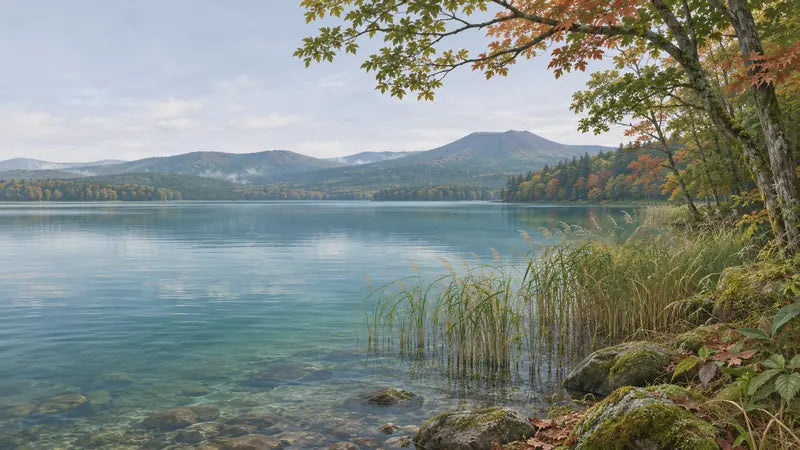
Why Are Marimo a Special Natural Monument in Japan?
Lake Akan's marimo (阿寒湖のマリモ, Marimo of Lake Akan) were made a Natural Monument of Japan on 3 March 1921 and a Special Natural Monument on 29 March 1952. That is the higher class under the 1950 Law for the Protection of Cultural Properties. It covers the whole of Lake Akan and protects the wild population and its habitat. Altering its current state needs the Commissioner's permission. It does not make cultivated, shop or foreign marimo a Special Natural Monument. This page is general information, not legal advice. Rules change, so check with your state's agriculture or wildlife agency before buying, selling or shipping moss balls.
Read the guide →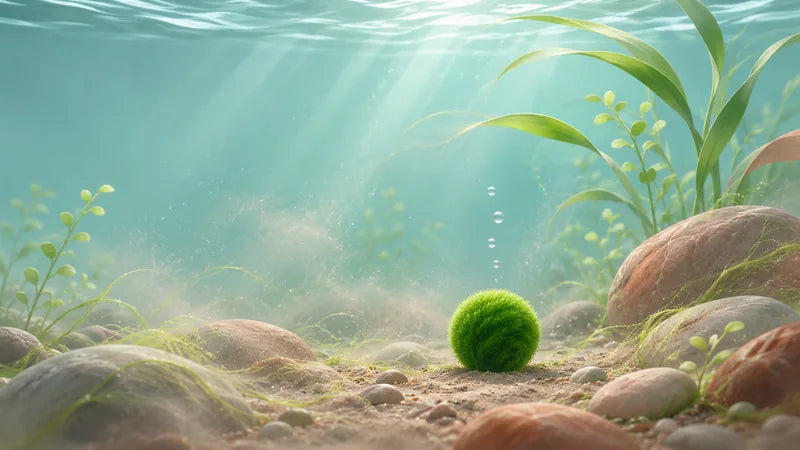
Why Are Wild Marimo Declining?
A 2010 survey found this alga had not been recorded in the previous 30 years at more than 50% of its known locations. Ball and free-floating forms declined more than attached forms. Nutrient pollution was the main cause the authors suspected. "Not recorded" is not the same as confirmed gone. Lake Akan lost two of its four historical ball colonies, mainly to logging silt. Lake Mývatn's large colonies were gone by about 2013 to 2014; the cause is still debated.
Read the guide →
Marimo Myths, Checked
Marimo are living green algae, not moss and not animals. They do not need distilled water, salt, or fertilizer, and can live for decades. They grow wild in many countries, not only in Japan. There is no historical or botanical record that they grant wishes or bring luck. They are not banned as a plant by the US federal government, and official pages do not say every ball is contaminated. Lake Akan wash-ups are part of the natural cycle.
Read the guide →