






The Marimo Love Story: the True History
The famous lovers story is not an ancient Ainu tradition. Nagata Kosaku wrote it for an Osaka Asahi collection in 1922, and nobody drowns in that version. The drowning and the name "love marimo" first appear in 1931. A 1953 hit song spread the story across Japan. In 1940, Yamamoto Tasuke wrote that the Lake Akan Ainu did not know it. There is no historical record of a custom of giving marimo as a love, luck or wish gift.
Quick facts
- First printed in 1922, in an Osaka Asahi collection, as a short story by Nagata Kosaku, a non-Ainu Japanese writer. In that version, nobody jumps into the lake.16
- The heroine is Setona. The young man is Manibe in 1922; later Japanese versions mostly say Manipe. "Senato" appears in English copy, and its author is unknown.7
- Aoki Junji reprinted the story in 1924 and 1926, in books sold as Ainu legends.8
- The drowning ending and the name "love marimo" first appear in the Kushiro Shimbun in 1931.2
- Yamamoto Tasuke wrote in 1940 that the Lake Akan Ainu did not know the story.4
- A 1953 hit song helped spread the story across Japan.3
- The Lake Akan Marimo Festival began in 1950. That story is on Lake Akan Marimo Festival.9
The legend, briefly
A well-known Japanese story tells of Setona, a chief's daughter, and a young man, Manibe, later often called Manipe, at Lake Akan. In the first 1922 printing, Manibe rows out playing a reed flute and is never seen again; Setona dies calling his name; and among the marimo already in the lake, there is said to be one in which two have become one. Nobody drowns in that version.1
Later tellings, from 1931 on, have the lovers go into the lake, and some later versions say marimo appeared or multiplied after they died. That twist is not in the 1922 original.210
This is not an Ainu folktale, and it is not a story passed down for centuries. The names Setona and Manibe are the 1922 spellings. "Senato" is not used here as the heroine's name, because that spelling comes from English copy whose author is unknown.17
The real history: 1922, 1931 and a 1953 hit song
1922: Nagata Kosaku and an Osaka Asahi collection
The story was first published in August 1922, in a collection from an Osaka Asahi Shimbun reader contest, as Nagata Kosaku's "The sad reed flute on the wind from Mt. Akan." Nagata (1900 to 1984) was a non-Ainu Japanese writer.16
A National Diet Library catalogue record lists that book as edited and published by Asahi Shimbunsha, in Osaka, in 1922. We have not read the book itself; the digitized copy is on-site only at the library. The safe wording, and the wording used here, is that it was printed in an Osaka Asahi collection in 1922.6
In 1924 and 1926, Aoki Junji reprinted the story in books presented as Ainu legends, trimming modern clues so it would read more like an old folktale, while still crediting the 1922 collection. That comparison comes from later research; the Aoki texts were not seen directly in this pass.8
A later handwritten memo from Nagata, given to Kushiro by his son in 2017, says he based the story on an anecdote an old Ainu man in Harutori, Kushiro, told him, and that he changed the place and the plot. So the Lake Akan and marimo setting are his. This is one memo, known through later summaries, and it is not proof that the marimo story is an Ainu tradition. The memo's own contest date does not match the 1922 mountain collection, and we leave that inconsistency open.11
1931: the drowning and "love marimo"
The lovers' lake suicide first appears in the Kushiro Shimbun on 28 June 1931, tied to a radio talk on "Ainu legends." The nickname "love marimo" first appears there on 26 July 1931.2
Yamamoto Tasuke printed the story in 1940, in a version in which both lovers go into the lake, and wrote that in three years of research the Lake Akan Ainu did not know this famous legend. Later tellings often followed that version, but it is not written here as "the standard one." The 1940 book itself has not been seen in this pass.4
A 1953 hit song
A 1953 hit song, with lyrics by Iwase Hiroshi, music by Yashima Hideaki, and sung by Ando Mariko of Kitami, alludes to the legend and helped spread it across Japan.3
In outline only: the song mentions a sad romance that, it says, still remains in an Ainu village, and it claims that marimo float when it is clear and sink when it is cloudy. A 1991 book, as later quoted, said that lab aquarium marimo with good light will float and sink, but that Lake Akan marimo do not move the way the song claims. More on floating is on Why is my marimo floating?.12
The 1950 festival and the Ainu
The Lake Akan Marimo Festival began in 1950 as a new event to protect Lake Akan's marimo and to return balls that people had taken. It uses Ainu ritual forms. It is not an ancient Ainu tradition. The festival story is on Lake Akan Marimo Festival.9
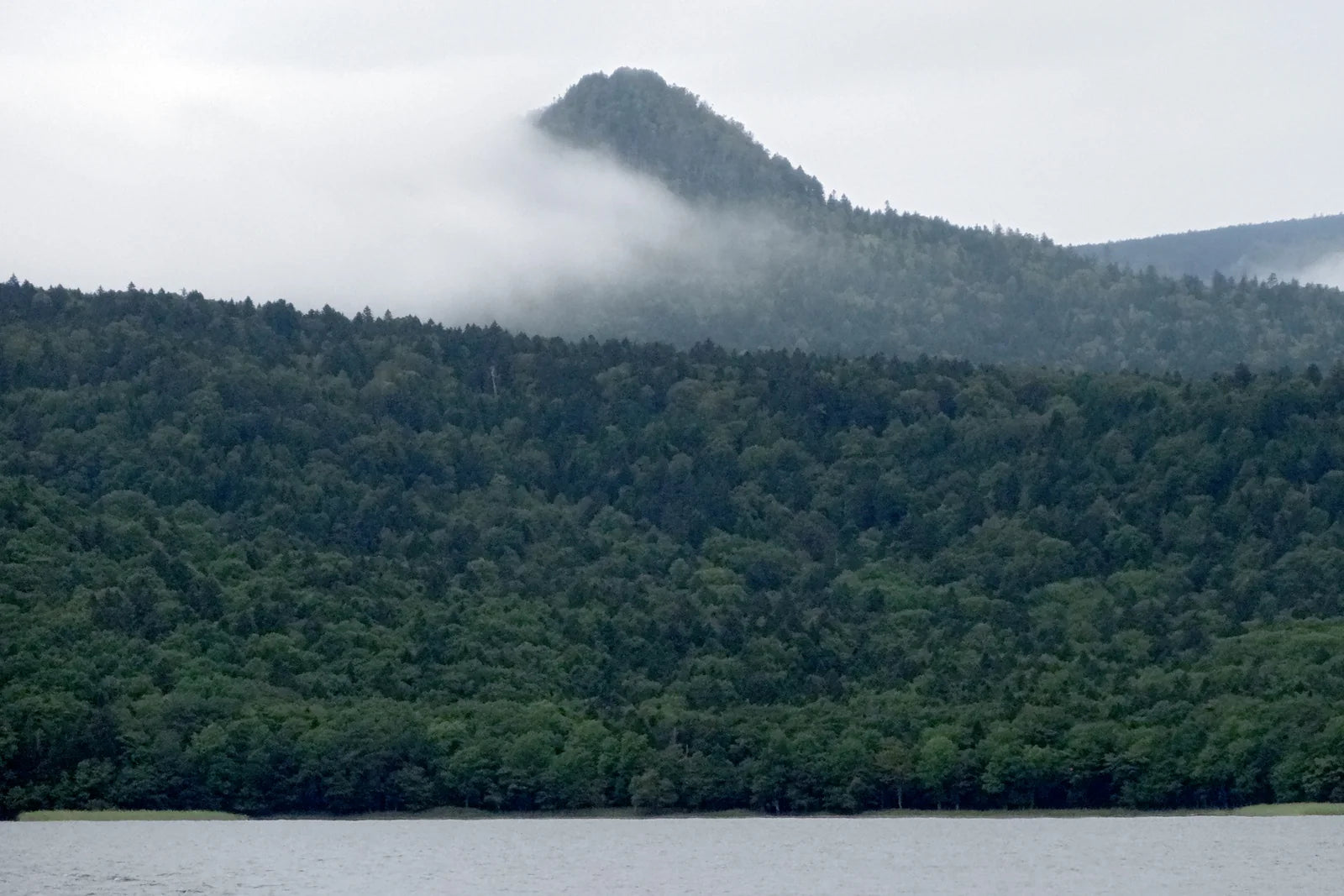

The lovers story is not an Ainu oral tradition. Yamamoto Tasuke, an Ainu leader and one of the people who later helped start the festival, wrote in 1940 that the Lake Akan Ainu did not know it. A different, non-romantic tale about angry water chestnuts is what Ainu elders around Lake Akan were reported to have told; that tale belongs on The Ainu and marimo.413
In 2017, after a newspaper reported Nagata's authorship, Nishida Masao, then head of the Akan Ainu Craft Cooperative, was quoted in a tentative sense: tell the story only if it is made clear it is not an Ainu legend. A reporter's paraphrase, not a direct quote, said the Akan tourism body hoped to keep passing the story on with the source made clear. The fuller Ainu context is on The Ainu and marimo.14
Myths
"The marimo legend is an ancient Ainu tradition." False. The festival began in 1950, and the lovers story was written in 1922.19
"The Setona and Manipe lovers legend is an ancient Ainu story." False. It was written by a non-Ainu author in 1922. Akan Ainu elders did not know it.14
"In Japan, marimo are traditionally given as a token of love." False. There is no published study or historical record for a custom of giving marimo to a partner. The love story dates from 1922, and its "love marimo" nickname from 1931, but that is not a gift custom.5
"Marimo bring luck or love, or are a traditional lucky or love gift, or they grant wishes." False. There is no published study or historical record for it. Related short verdicts are also on Marimo myths, checked. For the name, see How marimo got its name.5
"The lovers are named Senato and Manibe." Partly true. The names are Setona and Manibe in 1922, and Setona and Manipe in most later Japanese versions. "Senato" is English copy, and its author is unknown.7
"The legend says the lovers ran away, lived in the forest, and marimo appeared decades later." False. No published Japanese version we found says this. That plot is a modern English retelling, and there is no published study or historical record for who wrote it.15
"The love story has been told since the 1800s, or for centuries." False. It was first printed in 1922.16
"Marimo first appeared in Lake Akan because of the lovers." False. In the 1922 story, marimo are already in the lake. That twist was added later.10
"Marimo float when it is sunny and sink when it is cloudy." Partly true. They can float in a bright tank, but a 1991 book, as later quoted, said they do not do this in Lake Akan as the song claims. See Why is my marimo floating?.12
Keeping a marimo at home
This page is a history page, not a care guide, and it does not say that a home-kept ball came from a named wild lake. If you are keeping a home ball, our care guide is at Caring for your Moss Ball Pets™.
FAQ
Is the famous marimo love story an ancient Ainu tradition?
Who wrote it, and when was it first printed?
When were the lovers' drowning and the name "love marimo" added?
What was the 1953 song?
A 1953 hit song helped spread the story across Japan.3
Are marimo a traditional love, luck or wish gift?
There is no historical record of a custom of giving marimo as a love, luck or wish gift.5
Do Moss Ball Pets™ marimo come from Lake Akan or from Japan?
Moss Ball Pets™ marimo don't come from Lake Akan or from Japan.
Discover the Magic of Marimo
Design your own terrarium, or start with a ready-made kit.
Footnotes
- Jon L. Pitt 2024; Isamu Wakana 2019; Isamu Wakana 2018. The lovers story was written by Nagata Kosaku and printed in 1922. It is not an Ainu tradition. In that first version, nobody jumps into the lake.
- Isamu Wakana 2018. The drowning ending and the nickname "love marimo" first appear in the Kushiro Shimbun on 28 June and 26 July 1931. Those pages are known through later quotes and photos, not from a direct reading of the 1931 issues. The dates and the Japanese nickname need a careful second read.
- Jon L. Pitt 2024; Isamu Wakana 2019; Isamu Wakana 2018. Safe wording is "a 1953 hit song." This page does not print a settled contest year or monument year, and it does not quote the lyrics.
- Jon L. Pitt 2024; Isamu Wakana 2018. Yamamoto Tasuke wrote in 1940 that in three years of research the Lake Akan Ainu did not know the story. The wording is that they "did not know it," not that he "spoke with" them. The 1940 book itself has not been seen in this pass.
- Jon L. Pitt 2024. Seller copy is a lead only, never proof, and is not used as evidence of a custom.
- 国立国会図書館 bibliographic record; editor and publisher 朝日新聞社, 山の伝説と情話 Mountain legends and love stories; Jon L. Pitt 2024; Isamu Wakana 2018. A live National Diet Library record lists Asahi Shimbunsha, Osaka, 1922, as editor and publisher. The book itself was not read. Safe wording is "an Osaka Asahi collection."
- Isamu Wakana 2018; Jon L. Pitt 2024. Use Setona, and say Manibe in 1922 and Manipe in most later Japanese versions. "Senato" appears in English copy, and who wrote that English version is not established.
- Isamu Wakana 2018. Use 1924 for Aoki, and 1922 for Nagata. The 1924 and 1926 texts were not seen directly; the comparison is from later research and needs a careful second read.
- 煎本孝 2001; Jon L. Pitt 2024. The festival began in 1950 as a new event. This page gives one line and a link. Page 20 owns the festival in depth.
- Isamu Wakana 2018. In the 1922 story, marimo are already in the lake. The idea that marimo first appeared because of the lovers was added later.
- Isamu Wakana 2018; Jon L. Pitt 2024; 北海道新聞 and どうしん電子版 2017. The memo is treated as likely, not as proof that the marimo story is Ainu. Its contest date does not match the 1922 mountain collection, and that inconsistency is left open.
- Isamu Wakana 2018. One line only, then a link to page 7. The 1991 book itself was not read. This page does not quote the song lyrics.
- Isamu Wakana 2018; Jon L. Pitt 2024. The pekanpe tale is mentioned in one clause only. Page 27 owns that story. This page does not choose a meaning for Ainu names for marimo.
- Jon L. Pitt 2024; 北海道新聞 and どうしん電子版 2017. The 2017 remark is used in a tentative sense: tell the story only if it is made clear it is not an Ainu legend. The original newspaper article was not read on the paper's own site.
- Jon L. Pitt 2024.
- Jon L. Pitt 2024; Isamu Wakana 2018. The story was first printed in 1922. It is not a tale told since the 1800s, or for centuries.
Sources
- Jon L. Pitt (University of California, Irvine) (2024). Becoming Marimo: The Curious Case of a Charismatic Algae and Imagined Indigeneity. In: Being Algae: Transformations in Water, Plants (Critical Plant Studies 8), eds. Hendlin, Weggelaar, Derossi, Mugnai, pp. 195 to 214. Publisher: Brill (open access, CC BY-NC 4.0). Link: https://doi.org/10.1163/9789004683310_011. Checked 2026-11-04.
- Isamu Wakana (2019). 「恋マリモ伝説」連載 (マリモ博士の研究日記): ① アイヌの伝説か和人の創作か; ④ セトナとマニペ 物語の誕生; ⑨ 高まるアイヌ伝説への関心; ⑪ 恋マリモ 名称の系譜; ⑲ 伝説はマリモと人との関わりの歴史 [Series on the "Marimo love legend": (1) Ainu legend or Japanese invention?; (4) Birth of the Setona and Manipe story; (9) Rising interest in Ainu legends; (11) History of the name "koi marimo"; (19) The legend as a history of people and marimo]. Link: https://ameblo.jp/maromo-lab/entry-12433135776.html. Checked 2026-11-04.
- Isamu Wakana (2018). 日本マリモ紀行『マリモ伝説』(全23回) [Japan marimo journey: "The marimo legend" (23 parts)]. Kushiro Shimbun culture page, 2018-06 to 2019-03 (reposted on the blog Dr. Marimo's research diary). Link: https://ameblo.jp/maromo-lab/entry-12435202131.html. Checked 2026-11-04.
- 国立国会図書館 (National Diet Library) bibliographic record; editor and publisher 朝日新聞社 (Asahi Shimbunsha). 山の伝説と情話 [Mountain legends and love stories]. Link: https://ndlsearch.ndl.go.jp/books/R100000039-I970243. Checked 2026-11-10.
- 煎本孝 (Irimoto Takashi) (2001). まりも祭りの創造:アイヌの帰属性と民族的共生 [Creation of the Marimo Festival: Ainu identity and ethnic symbiosis (Japanese version of Irimoto 2004, Senri Ethnological Studies 66)]. 民族學研究 (Japanese Journal of Ethnology) 66(3): 320 to 343. Link: https://www.jstage.jst.go.jp/article/minkennewseries/66/3/66_KJ00003544856/_article/-char/ja/. Checked 2026-11-10.
- 北海道新聞 (Hokkaido Shimbun), どうしん電子版 (Dōshin Digital) (2017). マリモ恋伝説、和人の創作だった アイヌ民族の話聞き着想 [The marimo love legend was a wajin (ethnic Japanese) creation: the idea came from a story told by Ainu people]. Link: https://newspicks.com/news/2446108/. Checked 2026-11-10.
Related guides

Lake Akan Marimo Festival
The Lake Akan Marimo Festival (まりも祭り) began in 1950 as a new event to protect Lake Akan's marimo and return balls that people had taken. It uses Ainu ritual forms, but it is not an ancient Ainu tradition. It is held every year on 8, 9 and 10 October. Its public rites welcome the marimo, protect them, and send them back to the lake by dugout canoe. Years of collecting, and a drop in the lake level for hydropower in spring 1950, led to the festival. In 1952 Japan raised the marimo to Special Natural Monument.
Read the guide →
The Ainu and Marimo: Names, the Festival and the Love Story
Ainu names for marimo exist, and sources translate them in different ways. The famous story of two lovers who became marimo was written in 1922 by a non-Ainu author and later presented as Ainu legend. The Lake Akan Marimo Festival, begun in 1950, is a modern event in which Ainu kamuynomi prayers have had a part from the start.
Read the guide →
Marimo Myths, Checked
Marimo are living green algae, not moss and not animals. They do not need distilled water, salt, or fertilizer, and can live for decades. They grow wild in many countries, not only in Japan. There is no historical or botanical record that they grant wishes or bring luck. They are not banned as a plant by the US federal government, and official pages do not say every ball is contaminated. Lake Akan wash-ups are part of the natural cycle.
Read the guide →
How Marimo Got Its Name
"Marimo" is a Japanese word, written 毬藻. 毬 means a ball and 藻 means algae or water plants, so it means "ball alga". Kawakami Takiya collected it at Lake Akan in 1897 and named it, after its shape, in a paper published in 1898. Historical records do not show that the name means good luck or love, and they do not record how English speakers say it. In Japanese it is three beats: ma-ri-mo.
Read the guide →
Lake Akan Marimo
Lake Akan is a freshwater lake in Kushiro City, Hokkaido, inside Akan-Mashu National Park. It sits in the Akan caldera. It is the only place now known with confidence to still hold colonies of large wild marimo balls, about 12 cm or more. The species itself does not grow only in Japan, and Japan has several lakes with the alga. This page is about the wild lake, not about the marimo we sell.
Read the guide →
Why Is My Marimo Floating? What the Bubbles Mean
A marimo usually floats because tiny bubbles of oxygen from photosynthesis get caught in it, and in lab studies it sinks again in the dark. Floating means it is making oxygen in the light, not that it feels happy. And a marimo that stays on the bottom is not, by that alone, unwell.
Read the guide →